Monday, October 29, 2012
Yeh Hai Aman Ki Aasha Ki Asal Shakal

Yeh Hai Aman Ki Aasha Ki Asal Shakal


معزرت
 کے ساتھ اس ویڈیو میں گالیاں بھی دی گئی ہیں یہ ویڈیو دکھانے کا مقصد ہندو اور ہمارے میڈیا کا اصلی چہرہ دکھانا تھا کے کس طرح یہ امن کی آشا کے نام پر ہمارے دو قومی نظریہ کو تبدیل کرنے کی کوشش کر رہے ہیں
مگر افسوس آج ہمارا بغیرت میڈیا ہمارے دوقومی نظریہ کو ہی تبدیل کرنے کے لیے سر توڑ کوشش کرنے میں مصروف ہے اور بھاررت کی امن کی آشا کے راگ سناتا رہتا ہے ہمیں . ہندو کبھی ہمارا خیر خواہ نہیں ہو سکتا
اسی لیے ہمارے بزرگوں نے ہم پر احسان کیا اپنی جانوں کا نظرانہ دے کر ہمیں مذہبی آزادی والا ملک دیا۔
جو لوگ بھارت سے محبتیں کرنے کی بات کرتے ہیں وہ ایک بار یہ سوچ لیں کیا ہم قائد اعظم اور اپنے بزرگوں سے غداری تو نہیں کر رہے ایک بار سوچیں ضرور ہمیں اس ملک کی حفاظت کرنی ہے چاہے اس کے لیے ہمیں کچھ بھی کرنا پڑئے میڈیا کے کردار کو جانیں اور ان کی چال کو بھی ۔۔

Saturday, October 27, 2012
Tuesday, July 17, 2012
Behaviour of Pakistani Users’s on Social Networking Websites Revealed

Behaviour of Pakistani Users’s on Social Networking Websites Revealed

Effective Measure an analytics and audience profiling firm that gather data of over half a billion internet users worldwide to assist publishers, advertisers, ad agenciesad networks and researchers, has released first ever insight on behaviour of Pakistani internet users on social network websites.
According to Effective Measures’s report, 38% Pakistani, reveals that Facebook, Google+ and YouTube are most favourite online social channels for Pakistani internet users. Facebook is said to have 53% popularity amongst Pakistani users, followed by YouTube at 25 percent while Google+ managed to grab 14 percent love from Pakistani internet users.
Effective Measure Regional Managing Director – Middle East Africa (MEA), Brendon Ogilvy, while commenting on report said:
“Pakistan has emerged as a hotbed of social media activity in the region, with many forming communities bound by common interests to exchange ideas and enhance interaction.
By sharing our exclusive and latest insight on Pakistan’s social networking community, we hope to show the potential of social media as an effective way for advertisers to reach out to brand advocates.”
Check below the graphical results of Pakistani users on Social Media:

Friday, April 27, 2012
Samsung overtakes Nokia in mobile phone

Samsung overtakes Nokia in mobile phone


Samsung Electronics has overtaken Nokia to become the world's largest maker of mobile phones, according to research firm Strategy Analytics.
Nokia took the top spot in 1998 from Motorola, but in the first quarter of 2012 Samsung shipped 93m phones compared to almost 83m by Nokia.
Samsung also reported its highest quarterly profit since 2008.
Net profit was 5.05tn won ($4.5bn; £2.8bn) in the quarter ending 31 March, up 81% from 2.78tn won last year.
Samsung is also the world's biggest TV and flat screen maker.
"We cautiously expect our earnings momentum to continue going forward, as competitiveness in our major businesses is enhanced," said Robert Yi, head of investor relations at Samsung.
Bright future
The firm said its IT and mobile communications division, which manufactures the smartphones, made an operating profit of 4.27tn won during the period, as revenues in the division surged 86% from a year earlier.
Samsung will unveil the latest version of its Galaxy range of phones on 3 May.
The Galaxy range has been very popular and helped Samsung overtake Apple to become the world's biggest seller of smartphones.
"The smartphone market has almost only two players, Samsung and Apple," said Lee Sei-Cheol of Meritz Securities.
"Since its Galaxy3 phone is being unveiled in May, Samsung will keep enjoying sales growth in its mobile phone division."

Global mobile handset shipments (Q1)

CompanyUnits (millions)Market share
SOURCE: STRATEGY ANALYTICS
Samsung
93.5
25.4%
Nokia
82.7
22.5%
Apple
35.1
9.5%
Other
156.7
42.6%
Profit call
Global demand for smartphones is expected to increase further in coming years, with research firm IDC forecasting that global smart phone shipments will rise by a third to 659.8 million units in 2012.

Start Quote

Samsung's handset earnings may weaken in the latter half of this year, with the possible launch of Apple's iPhone 5”
Brian ParkTong Yang Securities
Analysts said that given its robust growth and dominance in the sector, Samsung was well placed to benefit from this growth and boost its market share.
However, given the robust growth in the sector, other smartphone makers are also keen to introduce new products and tap into the fast-growing market.
Samsung is facing stiff competition from rivals such as US-based Apple, Finland's Nokia, and Taiwan's HTC.
Apple, which said earlier this week that it sold 35 million of its iPhones in the first quarter, is expected to launch a new version of its handset later this year.
Analysts said that as more models are launched, manufacturers may have to the cut price of their handsets in a bid to attract consumers, a move that may see profit margins shrink.
"Samsung's handset earnings may weaken in the latter half of this year, with the possible launch of Apple's iPhone 5," said Brian Park of Tong Yang Securities.
Chip troubles
Another area of concern for Samsung is likely to be its chip manufacturing unit, which has been hurt by slowing global demand for personal computers.
Models showing Samsung Galaxy phonesThe success of Galaxy range of handsets has helped Samsung offset falls in other units
The firm is one of the world's biggest makers of dynamic random-access memory (DRAM) chips, which are widely used in personal computers.
However, demand for these chips has been declining as consumers turn to tablet PCs, which mostly use flash memory chips.
At the same time, falling prices have also hurt profitability in the sector.
Samsung's memory-chip division saw its profits slide by 54% during the first quarter when compared with the same period a year earlier.
The company said it expected the demand for DRAM chips to rebound in the coming months, but warned that growing competition in the sector "will lead to a price decline".
Wednesday, April 25, 2012
Mobile phones: 'Still no evidence of harm to health'

Mobile phones: 'Still no evidence of harm to health'


here is still no evidence mobile phones harm human health, says a major safety review for the UK's Health Protection Agency (HPA).
Scientists looked at hundreds of studies of mobile exposure and found no conclusive links to cancer risk, brain function or infertility.
However, they said monitoring should continue because little was known about long-term effects.
The HPA said children should still avoid excessive use of mobiles.
It is the biggest ever review of the evidence surrounding the safety of mobile phones.
There are now an estimated 80 million mobiles in the UK, and because of TV and radio broadcasting, Wi-Fi, and other technological developments, the study said exposure to low-level radio frequency fields was almost universal and continuous.
A group of experts working for the HPA looked at all significant research into the effects of low-level radio frequency.
'Relatively reassuring'
They concluded that people who were not exposed above UK guideline levels did not experience any detectable symptoms.
That included people who reported being sensitive to radio frequency.
They also said there was no evidence that exposure caused brain tumours, other types of cancer, or harm to fertility or cardiovascular health.
But they said very little was known about risks beyond five years, because most people did not use mobile phones until the late 1990s.
Prof Anthony Swerdlow, who chaired the review group, said it was important to continue monitoring research.
"Even though it's relatively reassuring, I also think it's important that we keep an eye on the rates of brain tumours and other cancers," he said.
"One can't know what the long-term consequences are of something that has been around for only a short period."
There has been speculation about the health effects of using mobile phones for years.
The HPA conducted a previous review in 2003, which also concluded that there was no evidence of harm. But there is now far more research into the subject.
Advice on children
The experts said more work was needed on the effect of radio frequency fields on brain activity, and on the possible association with behavioural problems in children.
They also called for more investigation into the effects of new technology which emits radio frequency, such as smart meters in homes and airport security scanners.
The HPA said it was not changing its advice about mobile phone use by children.
"As this is a relatively new technology, the HPA will continue to advise a precautionary approach," said Dr John Cooper, director of the HPA's centre for radiation, chemical and environmental hazards.
"The HPA recommends that excessive use of mobile phones by children should be discouraged."
source bbc 
Wednesday, April 18, 2012
Android Trends in Pakistan

Android Trends in Pakistan


Google’s Android, the Linux-based OS for smartphones has been gaining immense popularity in the mobile market. It has receiving signiicant attention from customers in Pakistan’ growing mobile market.

In terms of mobile phones users Pakistani ranks 8th worldwide and 5th in Asia. In a world having 5.6 billion mobile phones users, China tops the ranking by having the maximum number of mobile phone users followes by India, United States, Indonesia, Brazil, Russia, Japan and Pakistan.
 Nearly 67% of the Pakistani’s population uses mobile phones and 23% of them own Smartphone. Although the overall share of Smartphones is comparatively lower, it is reckoned to increase significantly.

Android penetration in Pakistan can be observed from the fact that Pakistan Air Force (PAF) manufactured and introduced Android Tablet, PACPAD.

In Pakistan, all sorts of latest Android phones are available in the market including the most popular sets ranked by PC World i.e Samsung Galaxy Nexus, HTC One X, Rezound, T-Mobile MyTouch 4G Slid, Motorola DROID RAZR MAXX and Samsung Epic Touch 4G.

In App Market, most downloaded Android app in Pakisyan are iQuran, CamScanner, Advance TaskKiller, AccuWeather and Barcode Scanner.
Friday, April 13, 2012
no image

Why one in five U.S. adults don't use the Internet

Just over 20% of non-Internet-users say they know enough about technology to start going online if they wanted to.
STORY HIGHLIGHTS
  • Almost 48% say they don't go online because they don't think the Internet is relevant to them
  • Nearly 60% of U.S. adults who never completed high school don't use the internet
  • Having broadband Internet access is the best way to get the most use out of the web
  • A common reason why people shy away is they think it's a waste of time
Even though the Internet has become a key tool for accessing services, getting an education, finding jobs, getting the news, keeping up with people you know and much more, one in five U.S. adults still does not use the Internet at all, according to a new Pew report.
Why? Mostly they're just not interested -- not in the Web, e-mail, YouTube, Facebook or anything else that happens online.
"Among current non-internet users, almost half (48%) say the main reason they don't go online now is because they don't think the internet is relevant to them -- often saying they don't want to use the internet and don't need to use it to get the information they want or conduct the communication they want," said the report.
The respondents' next-most common reasons were that they don't have a computer or that it's too expensive, too difficult, or a waste of time.
Most Americans who don't currently go online have never gone online before -- and no one else in their household uses the Internet. Just over 20% of non-users say they know enough about technology to start going online if they wanted to, and only 10% said they're interested in using the internet or e-mail in the future.
Who are these neo-Luddites?
Mostly they're older -- 59% of U.S. seniors don't go online. Also, nearly 60% of U.S. adults who never completed high school don't use the Internet. And they're mostly poor -- nearly 40% of people with an annual household income under $30,000 don't go online. (Pew notes that people with an annual household income under $20,000 are especially unlikely to use the Internet.)
People with disabilities also are more likely to not use the Internet. One- quarter of U.S. adults live with a disability that interferes with activities of daily life -- and only 54% of these people are Internet users, Pew found.
But in terms of ethnicity, the U.S. digital divide has narrowed. According to Pew: "The internet access gap closest to disappearing is that between whites and minorities. Differences in access persist, especially in terms of adults who have high-speed broadband at home, but they have become significantly less prominent over the years -- and have disappeared entirely when other demographic factors (including language proficiency) are controlled for."
Having broadband access at home is one of the best ways to get the most benefits (or at least the most use) from the web -- and Pew found that right now 40% of U.S. adults don't have broadband at home.
In fact, after U.S. home broadband penetration peaked in May 2010 to cover 66% of U.S. adults, in the past year there's been a slight decline. As of August 2011, only 62% of U.S. adults had broadband at home -- a 4% drop.
The people who lack home broadband access are -- not surprisingly -- from the same demographics as people who don't go online at all: mostly older, with lower educational attainment and income, or living with a disability.
The racial aspect of the home broadband gap has narrowed, but not vanished. According to Pew: "By 2010, while national home broadband adoption had slowed, growth in broadband adoption among African Americans jumped well above the national average, with 22% broadband adoption growth since the previous year.
Even with these gains, however, minorities are still less likely than whites to have home broadband overall. And foreign-born and Spanish-dominant Latinos trail not only whites but also native and English-speaking Latinos."
Mobile devices are making a dent in the U.S. digital divide.
"Groups that have traditionally been on the other side of the digital divide in basic internet access are now using wireless connections to go online," said the report. "Among smartphone owners, young adults, minorities, those with no college experience, and those with lower household income levels are more likely than other groups to say that their phone is their main source of Internet access."
Many of these "cell mostly" users have other ways to get online, such as a desktop or laptop computer. However, a third of these people don't have home broadband -- and their smartphone is the main way they access the internet.
Mobile devices also tend to make people more avid Internet users.
"Once someone has a wireless device, she becomes much more active in how she uses the internet -- not just with wireless connectivity, but also with wired devices," said Pew. "The same holds true for the impact of wireless connections and people's interest in using the internet to connect with others.
These mobile users go online not just to find information but to share what they find and even create new content much more than they did before."

Wednesday, April 11, 2012
Use SMS with Responsibility

Use SMS with Responsibility

SMS is probably the most widely used communication channel in Pakistan. We exchanged 176 billion text messages in 2010 (last reported stats), which would have doubled in number by 2012.
With such massive usage, there comes a responsibility attatched to this medium which every citizen should respect and adopt with essence. If not used properly, this SMS medium can leavedisastrous impact on the society to easily crippled down the ecosystems of the country.
Hasb-e-Haal (A show on Dunya TV) recently discussed this matter and here thought of sharing the video with you to understand the responsibility attached with using SMS .


You can watch the video of this show on YouTube by following link:
Sunday, April 8, 2012
4 Latest Mobile Technologies and Their Advantages

4 Latest Mobile Technologies and Their Advantages

In today’s modernized world, telecommunications are one of the most fascinating technologies used by most people. Mobile phones have indeed come a long way from simply a mode of communication to one of the best gadgets that acts more like your mates. It has become so popular that one cannot imagine their lives without a mobile phone. It is not just a necessity, but an addiction too especially for teenagers. It is impossible to live without mobile phones today as the demand for mobile phones have gone up like wild fire. You will find almost every person walking on the street using mobile phones. Some of the groundbreaking mobile technologies have been listed below.
Near Field Communication
near_field_communication_nfc
(Image Source: Thebusinesstalks.wordpress.com)
One of the latest advancements in mobile technologies is with regards to how one pays for certain products in the checkout. Mobile phones like Samsung Galaxy Nexus make use of NFC (Near Field Communication) chip that makes contact with a reader in order to process a particular transaction. Some of the renowned outlets like McDonalds and Walgreens have already started using Near Field Communication equipped terminals. In addition, you can also make use of Google wallet service for tracking purchases too. Although some of the phones do not support Google wallet, therefore utilizing NFC for paying by phone is being worked out.
The greatest advantage of NFC is that it saves time as all you need to do is simply tap your cell phone on the terminal. NFC goes well beyond monetary transactions. You can now exchange data between two cell phones of Galaxy Nexus with the help of Android Beam service. You can place the mobile phones back to back for swapping browser pages, contact, and YouTube videos. Also, you can see Bluetooth gadgets using NFC for authenticating the connection between a headset and your phone, by tapping the devices at the same time. So, there is no need for Bluetooth pins anymore.
Bluetooth Health Device Protocol
bluetooth_health_device_protocol
(Image Source: Dexigner.com)
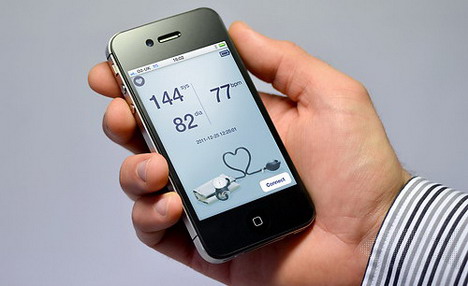
Bluetooth has always been around as it works quite well to stream music from the car stereo to your phone, or to use like a headset. But, now there have been quite a few advancements that are beyond the basic usage. The latest innovation is the new protocol known as Bluetooth Health Device Protocol that has already gained popularity. The whole idea of inventing this technology is to connect to heart trackers, step counting sensors in shoes, and the workout bike at the gym with no need for attaching transmitter. The best advantage of using Bluetooth Health Device Protocol is that it works well and needs no external adapters.
Advanced Mobile Security
advanced_mobile_phone_security
(Image Source: News.com.au)
As far as the security of mobile phone is concerned, Mobile Spy is the cell phone monitoring software that helps in protecting all the confidential information saved in the smart phones. When a phone gets stolen or misplaced, the data stored can be deleted discreetly to ensure that the same is not being misused. In addition, last year, a researcher discovered carriers making use of a service called as Carrier IQ. This particular service monitors the text messages as well as emails. Although, this exclusive service is something mobile carriers generally install it on their own, there are high chances that hackers could also do the same, or install an application that records sound and videos even when you are not making use of the inbuilt camera. In order to keep the mobile security intact, carriers like Verizon and Sprint have started making use of a threat management service known as Lookout. It analyses flags and traffic harmful malware and blocks access to your cell phones operating system.
Expansion in Speech Recognition
expansion_in_speech_recognition
(Image Source: Appadvice.com)
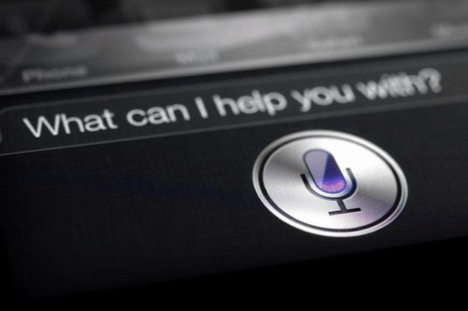
The Siri service especially on the iPhone 4S has proved that voice recognition feature on a mobile phone device actually works. You can speak commands like setting up a reminder on a dinner date with your loved ones, which appears as a pop up when you leave your workplace, based on the GPS location. The service can also read the incoming text messages. All the new applications will advance further. The Vlingo application for Android has the capability of reading all the incoming messages in addition to emails. This is quite an impressive advancement as email includes larger vocabulary when compared to text messages.
Advantages of Mobile Technologies
Increases Profitability & Productivity
Mobile technology helps people use the data and resources of the company without being tied in one particular location. Whether you are travelling for official meetings, on sales calls, working from home due to health problems, mobile technologies helps you to stay connected, be more productive, and make best use of company’s resources for the betterment of the business in terms of business profits. Employees cannot give excuses anymore that they are out of office in order to escape from their responsibilities.
Communication & Networking
Mobile technology gives room to companies to have connectivity between vendors, employees, or customers. Employees can download certain useful applications on their cell phones that help them to be aware of all the whereabouts of the company, and they can also get connected to social network such as Facebook, Twitter and related social media sites. Real time communication with the employees can be beneficial to deliver business requirements such as giving presentations to clients, quotations, checking stock levels, interacting with other employees while travelling, etc.
Marketing
There has been a new dimension introduced by mobile technologies into marketing and advertising for businesses across the globe. Potential clients can now see business advertisements and promotions on mobile phones with the help of varied marketing inventions such as text messages, mobile applications, mobile sites, banner ads, and more. These advertisements help in customizing in order to reach more targeted, and specific audiences. Marketing becomes more effective through this customization as there is an increased exposure of advertisements through the mobile technologies.
Business Development
As the technology of telecommunications is interactive in nature, exchanging information through this particular medium helps businesses to get instant feedback on services and products from clients. Due to this accessibility and speed, there is a rapid growth in the business development.
Wednesday, April 4, 2012
iPhone is more Popular than Android for WiFi

iPhone is more Popular than Android for WiFi

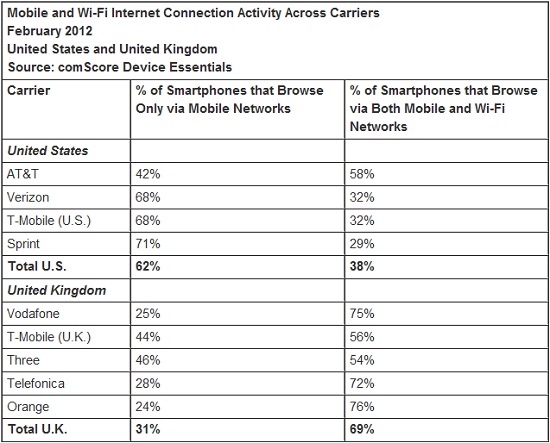
It is said in a survey that iPhone users use more WiFi network than Android users as Androidusers prefer their own mobile network whenever they feel to need to browse the internet.


The study however is not a general way to represent a global specimen, but based on user of smartphones in America only. In terms of percentage, 9% of iPhone users use mobilenetworks, while 68% of the ANdroid users are on ot. Comparatively, 71% of the iPhone users use WiFi and only 32% of the Android users are into it. This only shows where the trend for the advertisers must head to.
However in UK, WiFi is big with Android users, but at the same time, it is huge with iPhone users too, who also use mobile network equally. It then goes down to habit of browsing the internet basically or it could be about the strength of the WiFi connection and mobile networksservices in these two regions while creates the difference.
Here below is the result of iPhoen and Android users WiFi usage survey in US and UK:
Tuesday, April 3, 2012
no image

The New Timeline For Facebook Pages :What it Got ?

Facebook’s New Time Line for pages is the Most discussed topic of Social Sphere these days , There are split opinion of the new Facebook time line for pages and as well for User profiles, People still trying to figure out the best way to express there creativity or to understand the new system introduced by Facebook , Following is a great infographic which explains all the changes Facebook made and the specifics for the time line as well as the users feedback about the new timeline for Facebook pages take a look and let us know your views in the comments section below.


What is your Opinion ABOUT the Facebook Timeline ? Tell us your feedback in comments section below.
Monday, April 2, 2012
10 Great Books on Pakistan’s History

10 Great Books on Pakistan’s History

This is not a list of ‘top 10’ or ‘must read’ books about Pakistan in the traditional sense.  Rather, it’s a collection of titles that present a wide range of perspectives about a country that has a complex past and, to put it mildly, a confusing present.  It covers topics that include everything from the history behind the creation of Pakistan, to the man who led the movement, to a critique of how our history is being presented today, to a glimpse into the future.

The Great Divide Britain–India–Pakistan; by H. V. Hodson

This book looks back at the final days of the Raj (British rule) up to the creation of Pakistan.  The author discusses in great detail the events that led to the partition, how the power was transferred to the two nations and the aftermath of this history-altering event.

The Sole Spokesman: Jinnah, the Muslim League, and the Demand for Pakistan; by Ayesha Jalal

Although most historical accounts assert that the “two-nation theory” was the basis of the creation of Pakistan, there are opposing arguments as well.  In her book, Ayesha Jalal refutes the conventional explanation about the creation of Pakistan.  She shows how Muhammad Ali Jinnah negotiated with the British government and used the religion aspect as a strategic tool to protect the interests of the Muslims in India.

Jinnah: Creator of Pakistan, by Hector Bolitho

This is the first authoritative biography of Muhammad Ali Jinnah, which remained the only significant work for thirty years.  In this book, Bolitho interviewed numerous contemporaries and colleagues of Mr. Jinnah and weaved this insight with the political and personal life of this great leader.

Jinnah of Pakistan, by Stanley Wolpert

Coming 30 years after Hector Bolitho’s ‘Jinnah: the Creator of Pakistan‘, this book takes a different approach.  Up until this point, Jinnah’s depiction was quite misrepresented in most of the written works.  Stanley Wolpert presents a balanced and objective view of this towering figure of the modern world politics.

Jinnah, Pakistan and Islamic identity: the Search for Saladin; by Akbar S. Ahmed

The primary characters involved in the partition of India include: Jinnah, Gandhi, Nehru and Lord Mountbatten.  Among these four leaders, Jinnah has received a less than fair portrayal of his character, strategy and achievement.  This influential study by Akbar S. Ahmed, counters the prevailing narratives and presents a more balanced and well-rounded picture.

Pakistan: A Modern History, by Ian Talbot

The populist view of Pakistan in the west is fairly stereotypical with fundamentalism, violence and absence of true democracy as the central themes.  Ian Talbot presents a more refined understanding of Pakistan while breaking down the prevalent stereotypes. He argues that Pakistan is a complex region and is going through change and showing resilience against repeated dictatorial regimes and economic hardship.

The Idea of Pakistan, by Stephen P. Cohen

We constantly hear how Pakistan is a failed state, which is about to collapse.  This book counters this popular argument and presents an alternate view point.  The author touches upon various facets including foreign policy, the role of army, the role of Islam, economy, etc.  Stephen Cohen also presents some possible scenarios about the future of Pakistan.

The Oxford Companion to Pakistani History Edited by Ayesha Jalal

Students of Pakistani history will find this work to be of great value as it encompasses objective information about a vast array of topics related to Pakistan.  It begins with the pre-partition period and moves on to include the people, culture, architecture, economics, art, education and several other related subjects.

The Murder of History: A Critique of History Textbooks Used in Pakistan by K.K. Aziz

What we have come to know as the history of Pakistan, is it really like it is told? In this seminal work, K.K. Aziz keenly analyzed the history books used in our educational institutions.  He highlights the historical inaccuracies in our text books and discussed its impact on the minds of the students.

New Perspectives on Pakistan Visions for the Future Edited, by Saeed Shafqat

The prevalent discourse about Pakistan is fairly similar across the board, the primary themes of which are failed state, fundamentalism and a gloomy future.  But this collection of papers from various acclaimed authors tells otherwise based on research from multiple angles.
Do you see any substantial books missing from my “list”? I’m sure there are and I am counting on you to name a few.  Please share your picks with us.
Copyright © 2012 Mirchu.Com All Right Reserved
Designed by CBTblogger